Same but different: this thought struck me as I was passing through a Catholic church in Vilnius, Lithuania. Inside its faded, marigold-hued neoclassical housing were baroque ornaments galore and myriad life-size oil portraits of Jesus. No surprises there—I had seen similar Catholic visual tradition a hundred times on that roadtrip through Lithuania alone.
But one portrait in particular opened my eyes. Not to a religious calling, but to a strange and unshakeable familiarity in having seen that painting before. Like deja-vu, but if the repetition was screened through a funhouse mirror, I had a tenuous grasp of the same devotional image experienced earlier, elsewhere in the Baltics.
As it turns out, I had seen it just the day before in Riga, Latvia. Well, I had seen something both the same and different—another, equally effervescent portrait.
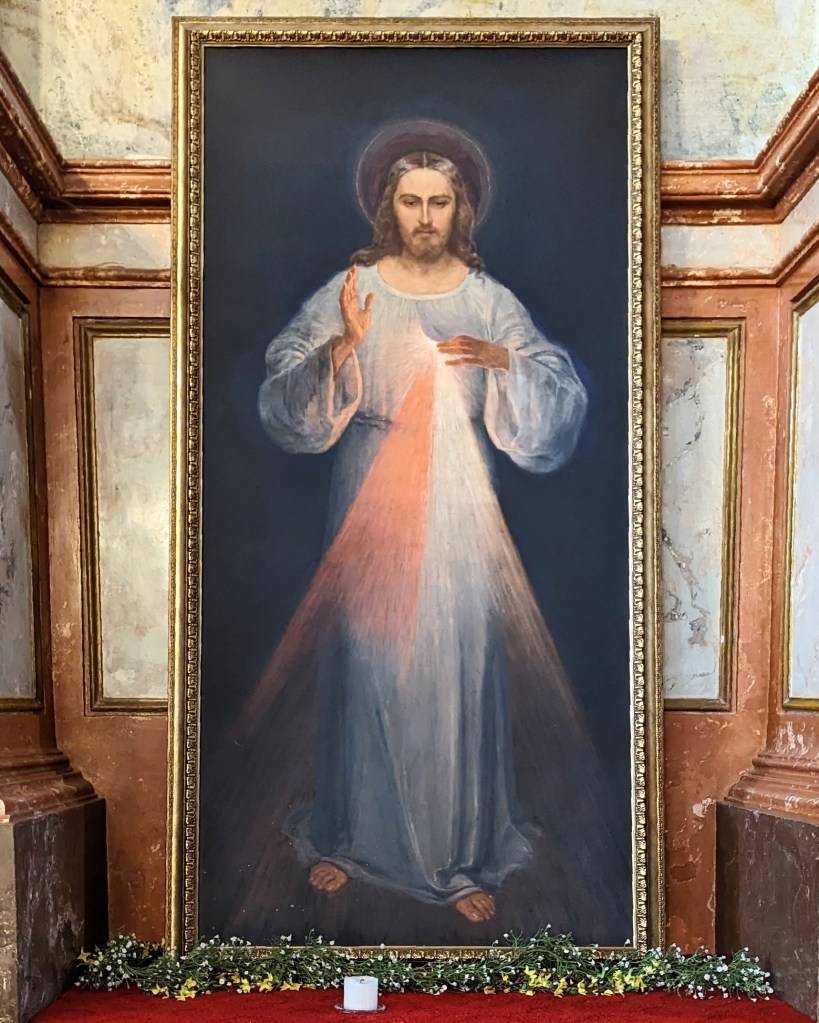
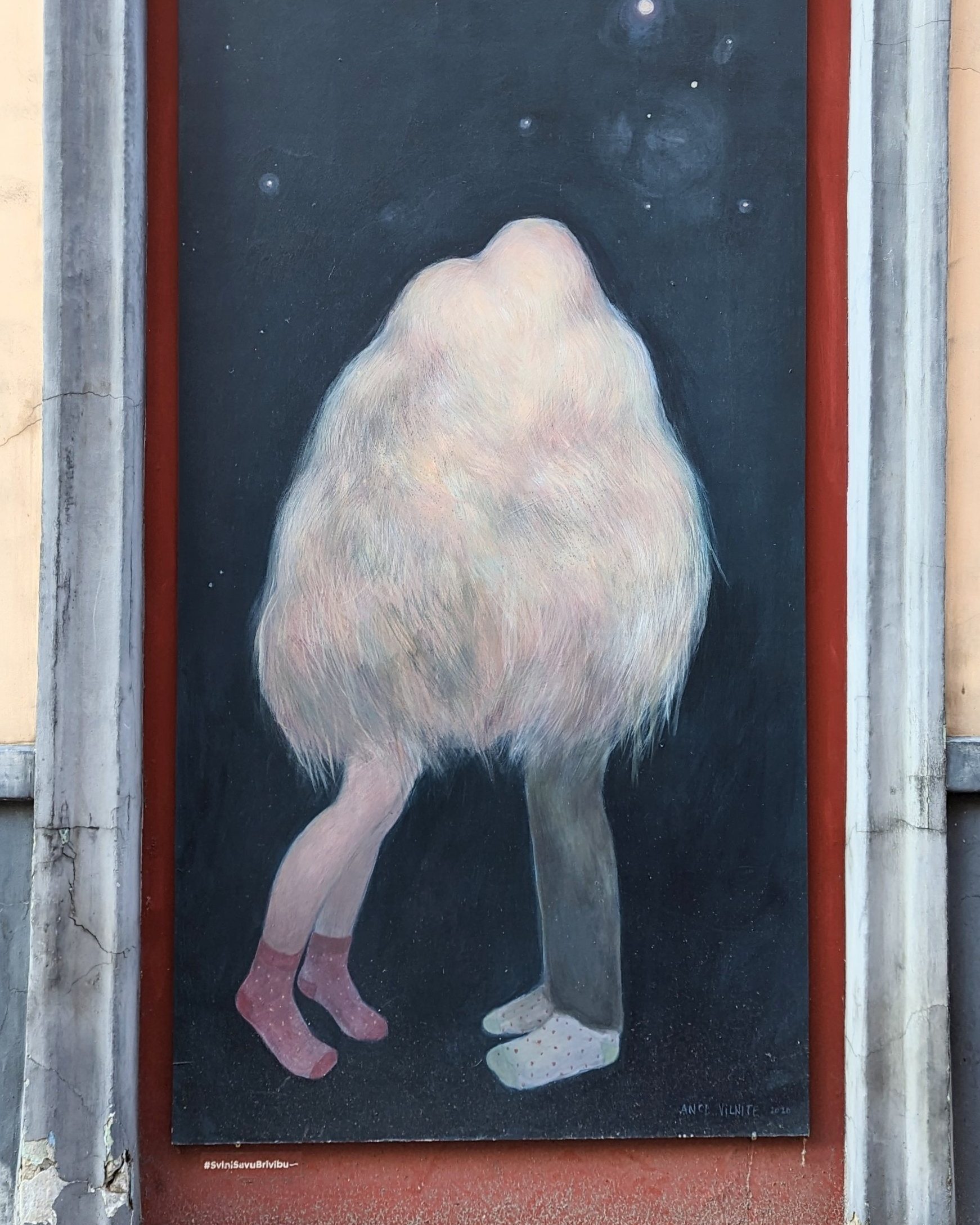
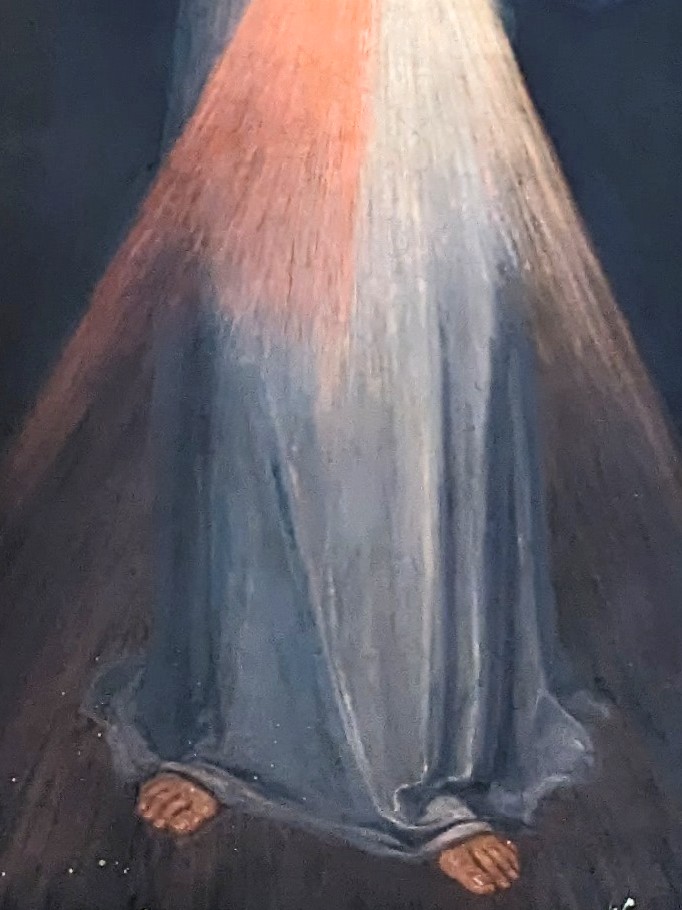
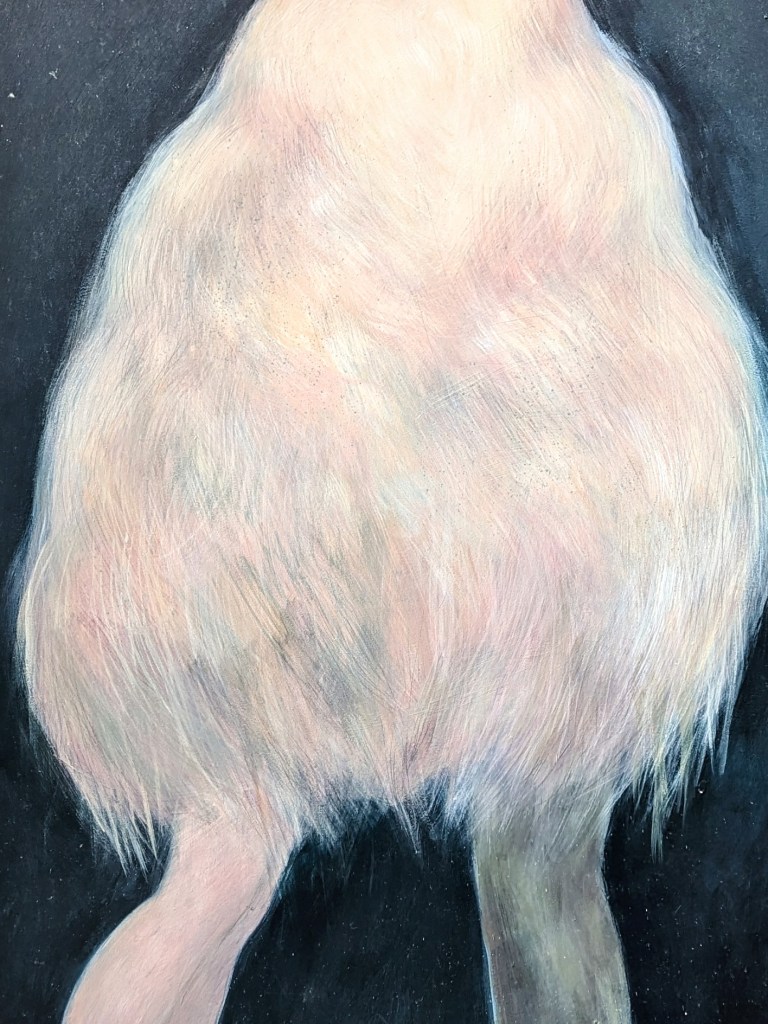
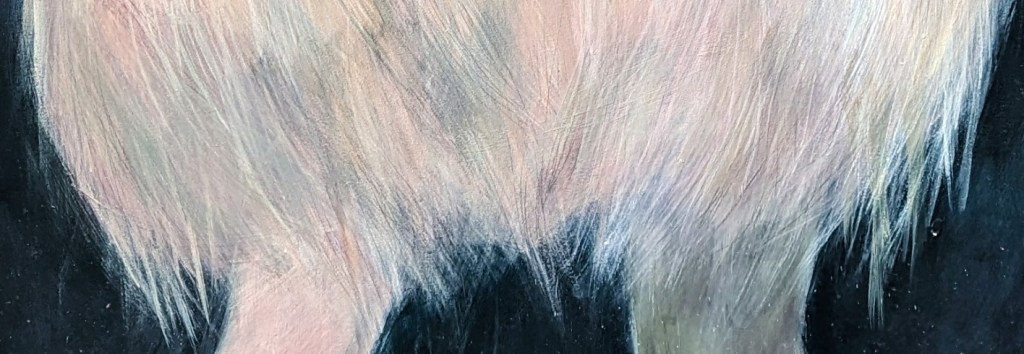
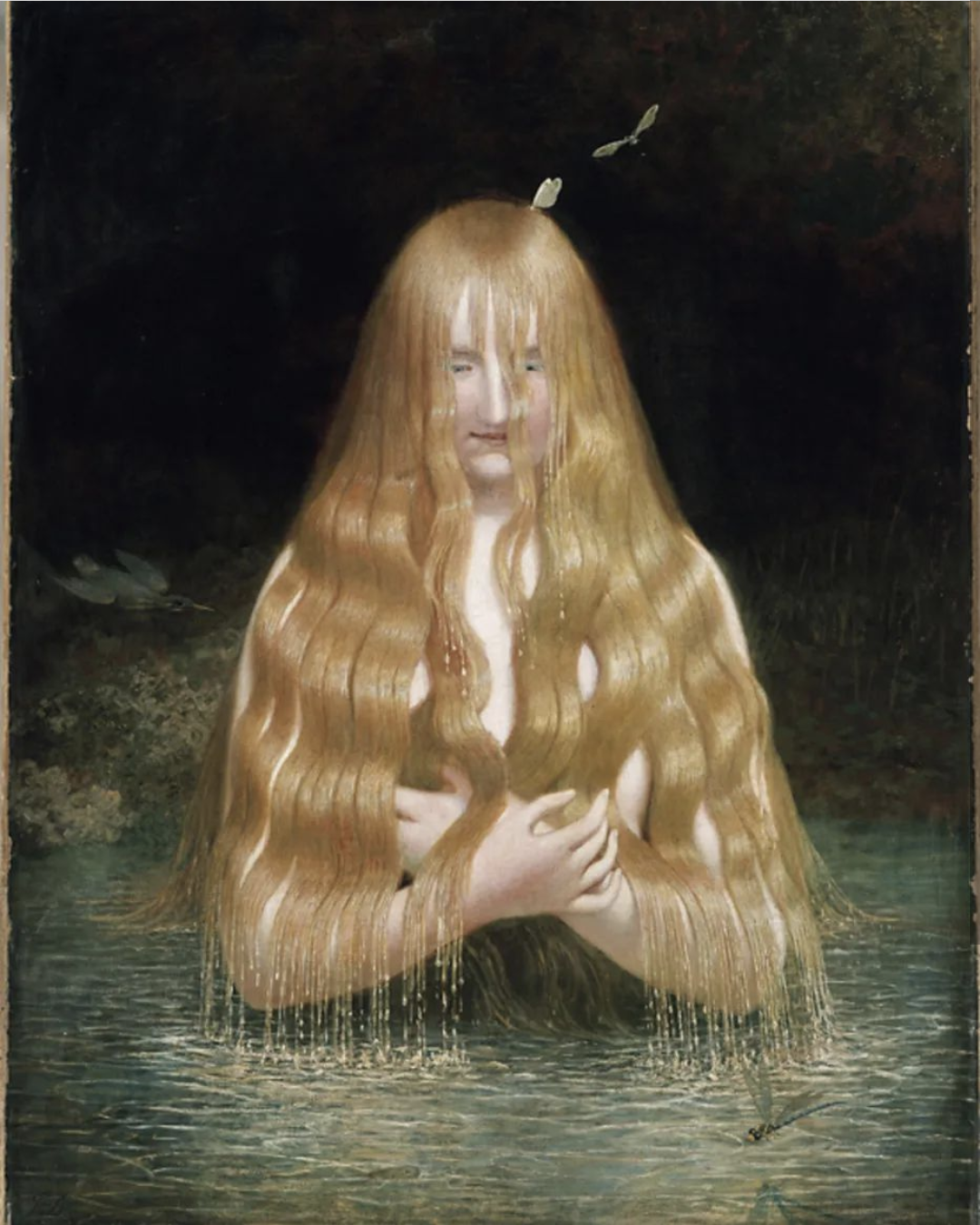
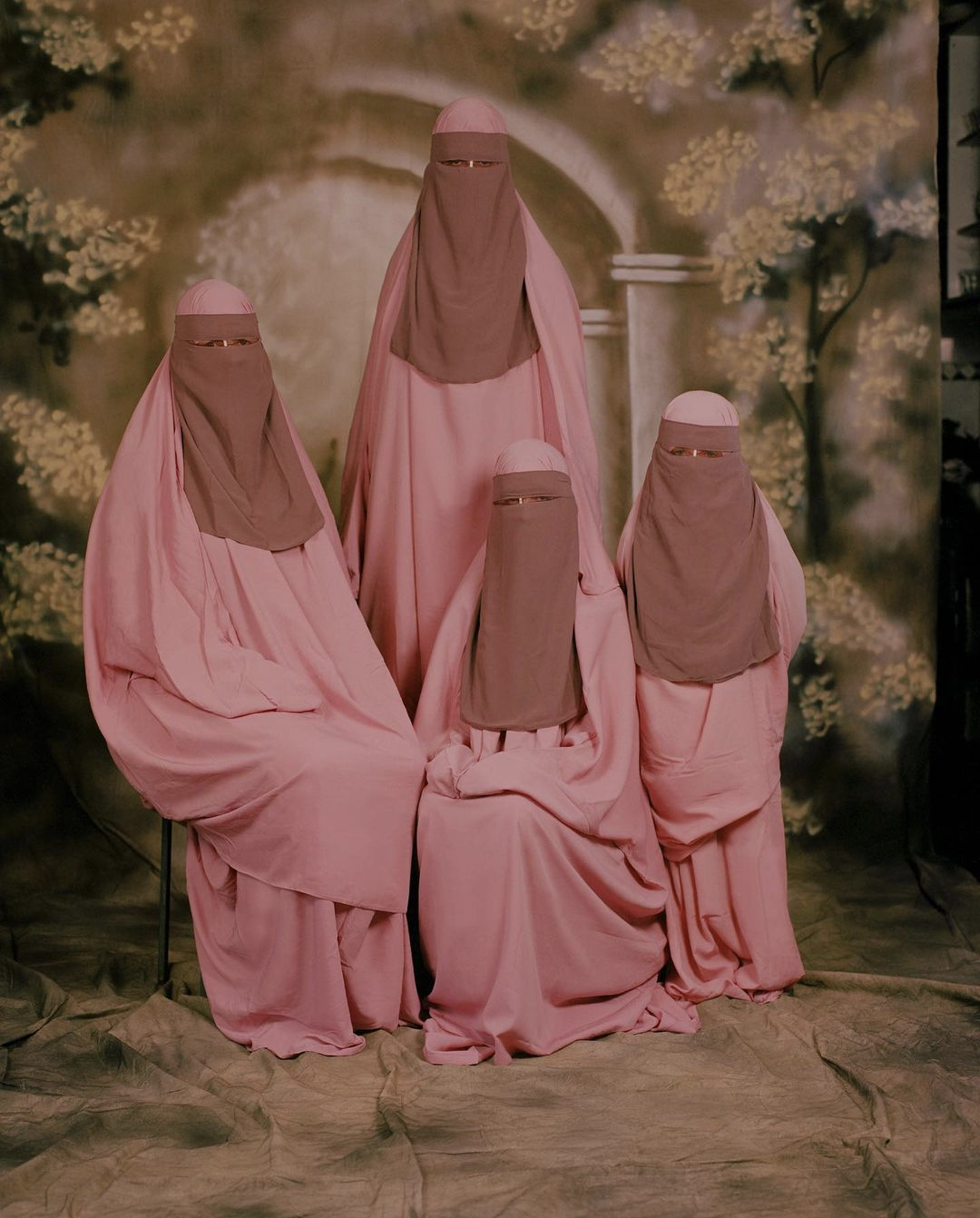
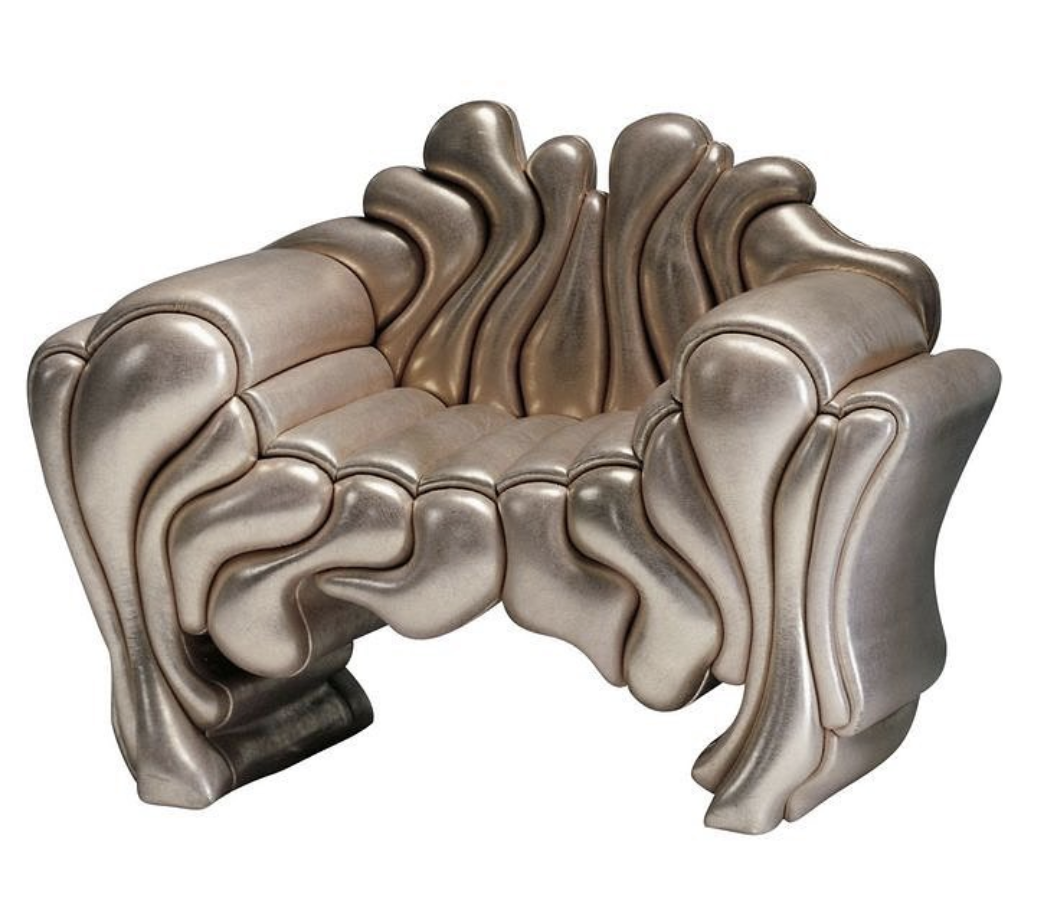
Blush pink pyramids, detailed textures, a cloud of ephemerality, seemingly elemental pushing and pulling, celestial invocations, simultaneously two and three parts of a whole*, blank surroundings, unity and humanity through surrealism, and chiaroscuro-like contrast… Individually and together, these artworks are a symbologist’s dream.
* This was my favorite lens with which to view these images. With two legs and two sides each, the portraits see each subjects’ pyramidal structures split into two halves. Both subjects are made of three distinct parts, however; Jesus is the Son, Father, and Holy Spirit, whereas the furry blob is presumably a woman, a man, and their wooly cover. Jesus’s middle part is also strong enough to cut the image in half, were the dual-toned strobe light not present.
After I recognized the mirroring of the two images, I couldn’t seem to put these common threads to rest. See: same but different.
Click images for details :~)

 L.E. Brown
Leave a comment