“We no longer say we are ‘online’ in the same way that we don’t say we are breathing; it is life. The web has evolved out of the web, out of the browser, into virtual worlds, worlds that use AI, and into our streets and our everyday lives, so that the boundaries are now so blurred…” – Rob Ford, Web Design: The Evolution of the Digital World 1990-Today, p. 14 (Introduction)
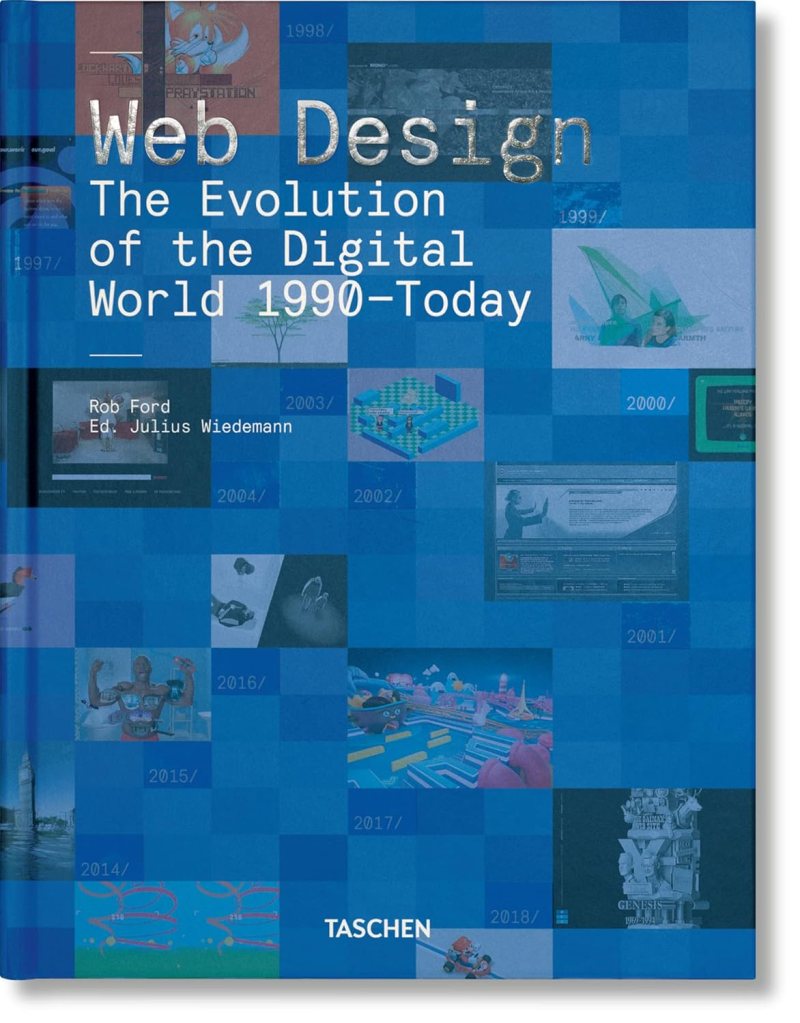
Rob Ford introduces his weighty, albeit image-filled, tome with this sentiment. He goes on to question whether websites, as we know them, are actually obsolete; argues that Adobe’s retired Flash software (d. 2020, RIP) was the most impactful technological innovation of our age; and details a timeline of the fluctuations, advances, global usage, and general highs-and-lows of the digital world, from the advent of the world wide web to 2019.
Meticulously researched by Ford and beautifully designed by Collaborate London, there are more insightful takeaways from this survey than I have time to share.
Its chronological detailing was a particular highlight to me, and I am sharing some of my favorite moments from web history below.
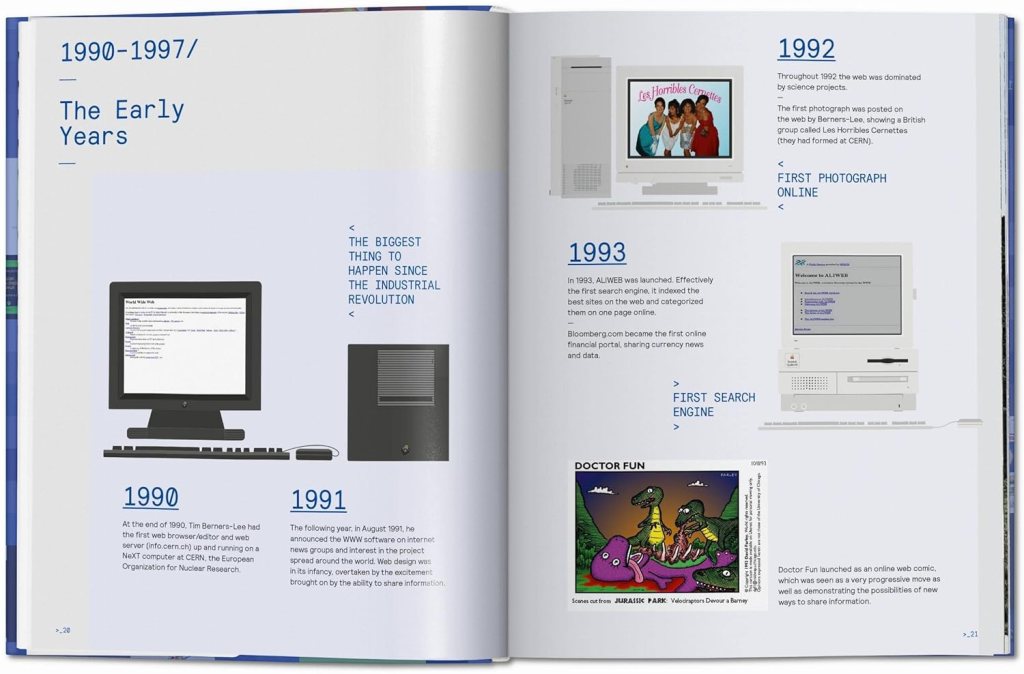
- 1991: WWW software launched.
- 1992: First photograph posted to the web (by Berners-Lee).
- 1994: Art.net (first art-specific website) launched.
- First online pizza order delivered
- 1995: Start of the dot-com boom.
- 1998: The year Macromedia Flash went mainstream – enabling interactivity within websites, “marking the arrival of responsive web design.”
- At this point, 147 million individuals (3.6% of the population) were “internet users,” with a total of 2.5 million websites online.
- 1999: First computer virus, the “Melissa virus,” widely spread by flirtily luring unsuspecting users to open a word.doc attachment with a “😉” in the email subject. Caused mass tech-infections and $80,000,000 of damage.
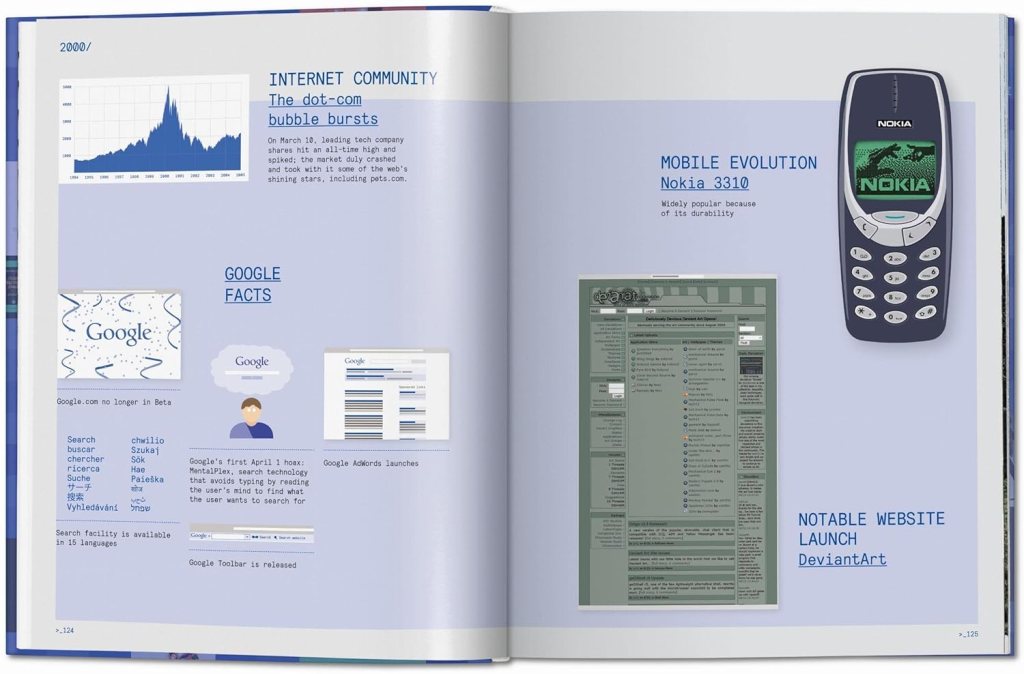
- 2000: The dot-com bubble bursts and internet investment market crashes.
- 2001: 9/11 is the top news story. At this point, 513 million individuals (8.2% of the population) internet users with 29.2 million websites online.
- First resizing interface published online for use.
- First “virtual tour” published online, for Sydney Opera House, which employed 360* panoramic scenes and point-and-click navigation.
- 2003: MySpace launched. Top 8 feature changed the world: making and breaking entire communities.
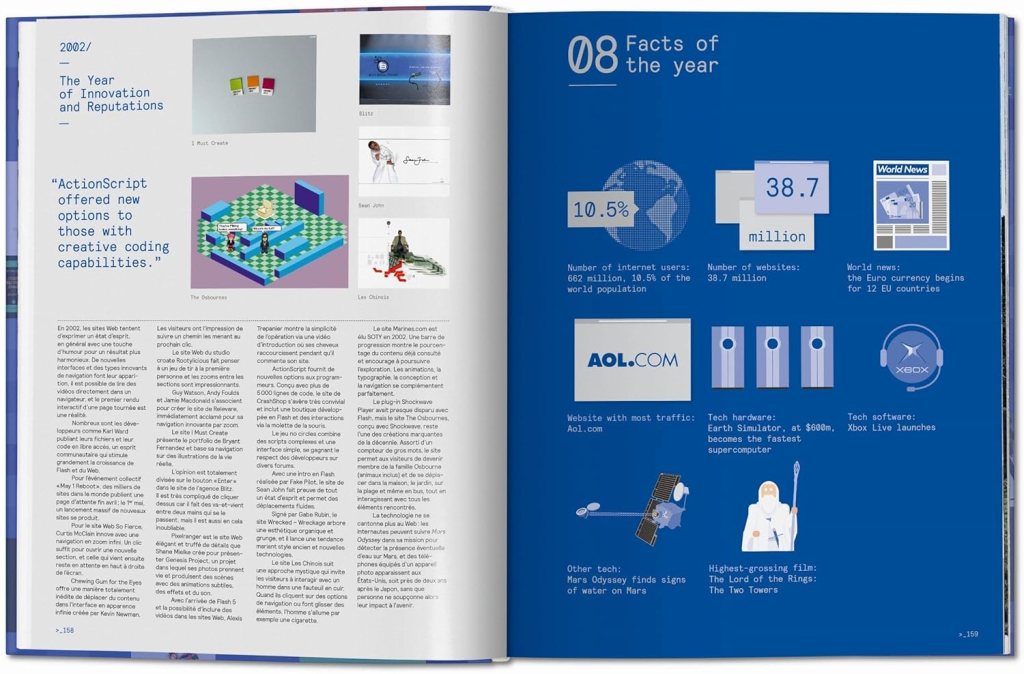
- 2004: MySpace began to focus on social networking rather than just file storage.
- TheFacebook launched, available only to Harvard students.
- The year when the number of active internet users passed 1 billion individuals (15.6% of the world’s population).
- 2005: YouTube launched.
- Nokia’s first 3G smartphone released with a front camera, marketed for video-calling (the first of its kind).
- 2006: Flash Earth launched (the same year as Google Maps), basically doing what we now do with Google Maps. Included the ability to click and drag global images, could zoom in as close as individual neighborhoods; essentially the first iteration of Google Earth in a web browser.
- OMG Shoes !
- 2007: Estonia becomes the first country in the world to use internet voting in an election.
- I added Maneater by Nelly Furtado to my MySpace profile.
- 2008: The first viral Facebook tribute page “Pray for Northern Illinois University Students and Families” with 55,000 members in 48 hours.
- PlurLife site launched, on which I was very popular.
- 2010: The first augmented reality game using Unity launched: Honeyway Train Webcam Game (Honey Nut Cheerios promotional game), which “broke new ground and set the path for other leading-edge AR projects to follow.”
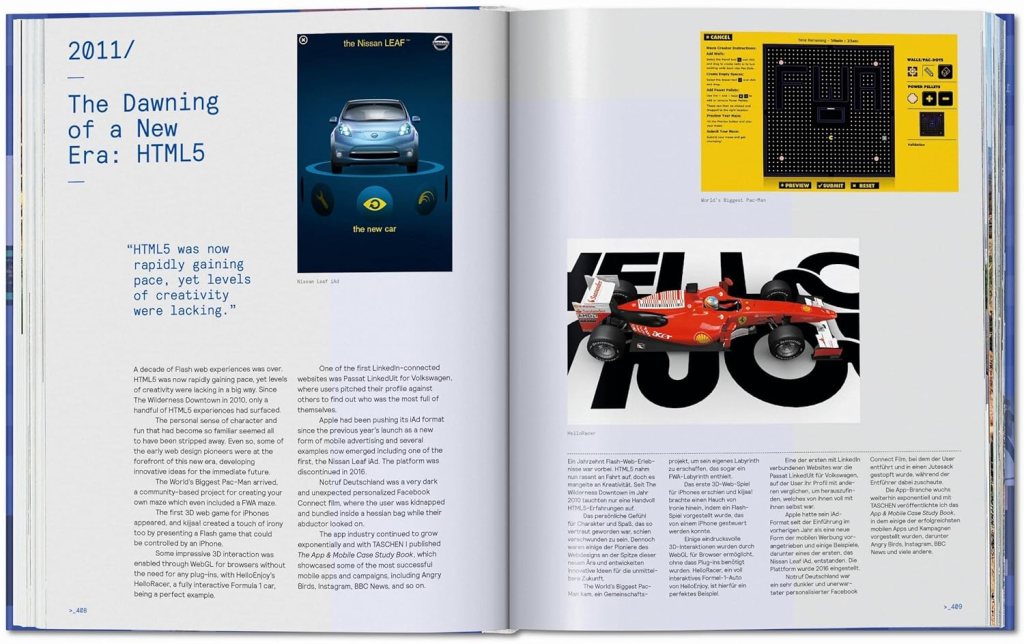
- 2011: “The Egyptian government shut off access to the internet in an attempt to stop people organizing protests which threatened to overthrow President Hosni Mubarak, but social networks such as Twitter and Facebook enabled activists to start an uprising.”
- 2013: The first online experience where movement of a mobile phone became the controller, without the need for plug-ins, using live accelerometer data.
- 2014: “The year mobile browsers became as powerful as desktops.”
- 2015: “Mobile-first” became a standout component of digital design and curation. Mario Ballario creates the first-known instance where the mosaic of Instagram images on his profile combine to create a singular image in the “tiles view.”
- 2015: “Offline Mode” launched – Chrome and Maps debuted improved offline features.
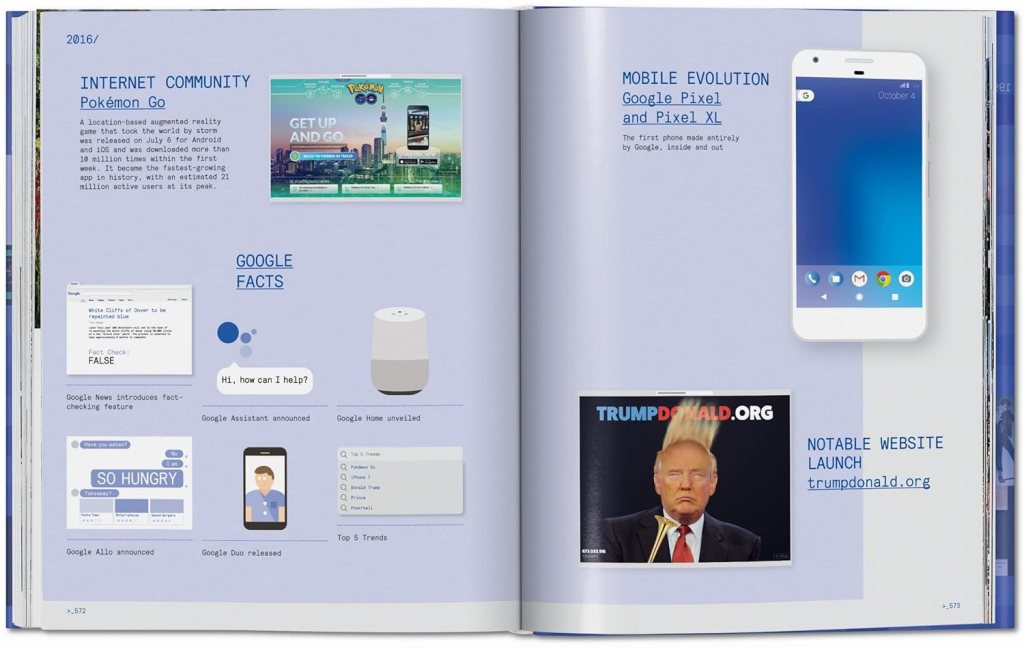
- 2016: The year artificial intelligence came to the web – “The new era of AI, AR, and VR heralded great changes, although many people found the idea of such new technology daunting and confusing.”
- Active web users comprised over half of the global population, with over 1 billion websites online.
- 2017: UNHCR’s Searching for Syria released as “a way for people to learn more about the Syrian refugee crisis by way of the five main questions being asked about the biggest humanitarian crisis of a generation” denoting the year “the web evolved out of the web.”
- 2018: Smartphones overtake all other modes of internet access combined, accounting for over 52% of online access.
- Finland launches its Digital Driving License identification with a digital watermark that was continually animated and updated; reimagined how identification can be made from the viewpoint of counterfeiting.
And the digital world continues to evolve everyday past the furthest reaches of our imagination. I wonder what a similar survey will look like in another 30 years…
Web Design: The Evolution of the Digital World 1990-Today [i.e. 2019] by Rob Ford, edited by Julius Wiedemann. © TASCHEN.
Purchase via Thriftbooks HERE, or I’ll mail you my copy if you pay for shipping. Not kidding.


Leave a Reply